
Homeowners insurance often covers mold removal partially, subject to a mold sublimit commonly around $5,000–$10,000. Coverage generally requires a sudden accidental cause, such as a burst supply line. Mold from humidity or gradual seepage is usually excluded.
Where to find your cap, which causes get paid, and why filing is not automatically free.
The number to find before you call anyone
Most policy discussions focus on whether mold is covered. The more decisive figure is the mold sublimit — a cap applying specifically to mold, set far below the policy's overall dwelling limit and applying even when the underlying cause is covered.
A house insured for $300,000 might carry a $5,000 mold cap. Since whole-home remediation can run $6,000–$15,000, that cap can mean the difference between a claim worth making and one that consumes your deductible without solving anything. It is in your policy under mold, fungi, or microbial limitations, and it is worth ten minutes to find.
Which causes get paid
| Cause | Typical outcome | Why |
|---|---|---|
| Burst supply line | Often covered, up to the sublimit | Sudden and accidental |
| Appliance overflow, discovered quickly | Often covered | Sudden, if promptly reported |
| Slow leak found later | Usually denied | Treated as gradual damage |
| Humidity and condensation | Denied | Maintenance, not a peril |
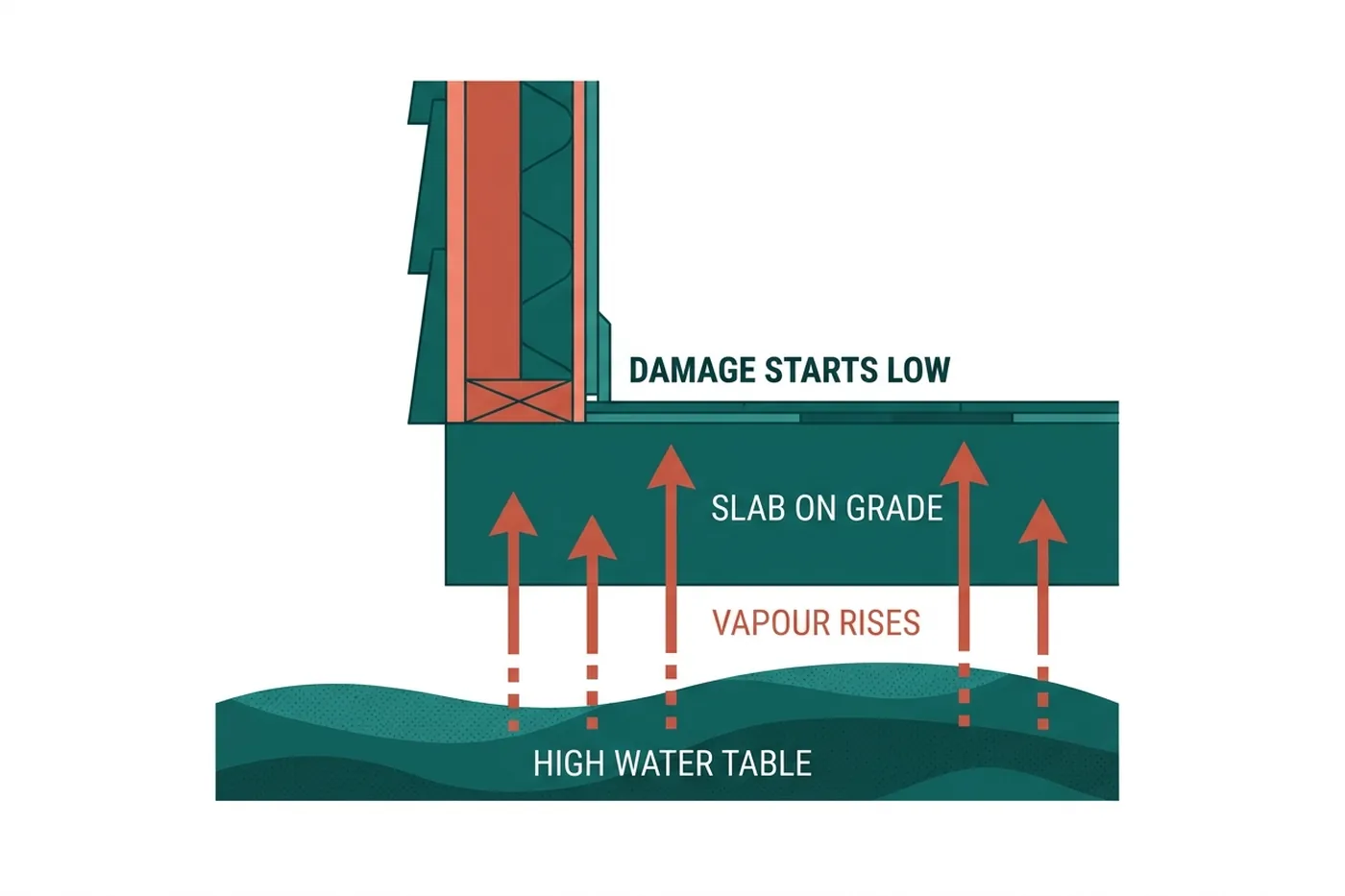
| Vapour rising through a slab | Denied | A building condition, not an event |
| Flooding | Not under homeowners | Requires separate flood coverage |
| Roof damage from a named storm | Often covered | Covered peril caused the water |
The pattern is consistent: insurers pay for events and decline conditions. The most common Lafayette mold causes — humidity and slab moisture — sit firmly on the condition side, which is worth knowing before you spend a morning on the phone.
What strengthens a claim that is worth making
- Report promptly. Delay is the most common reason a sudden-cause claim gets recharacterised as gradual.
- Photograph before anything is removed. Restoration destroys the evidence, and it cannot be recreated.
- Keep the failed component. A burst section of pipe is physical proof of a sudden event.
- Get the moisture source named in writing. A scope that identifies the cause supports the claim; one that only lists square footage does not.
Two costs nobody mentions
The first is the deductible, which on a job near the sublimit can consume most of what the claim would pay. The second is quieter: some carriers record the enquiry itself, not only the outcome, and that record follows the property. Ask your agent which of those applies before you describe anything in detail.
So the arithmetic is: sublimit, minus deductible, against the actual cost of the work — and only worth running at all when the cause was an event. When it was a condition, that money goes further at the thing producing the water.
Insurance: what people ask
Does homeowners insurance cover mold removal in Louisiana?
Often partially. Many policies carry a specific mold sublimit, commonly in the $5,000-$10,000 range, that applies even when the underlying cause is covered. Find that number in your policy before you file, because it usually determines whether the claim is worth making at all.
What makes a mold claim more likely to be paid?
That it followed a sudden accidental event which was itself covered - a burst supply line is the standard example. Mold arising from long-term humidity, gradual seepage, or deferred maintenance is generally excluded as a maintenance issue rather than a peril.
Is flood-related mold covered?
Not under a standard homeowners policy, which excludes flood entirely. That needs separate flood insurance. Mold following a flood is then handled under the flood policy's terms, which have their own limits and their own arguments about what counts as direct flood damage.
What is a mold sublimit?
A cap that applies specifically to mold, separate from and much lower than the policy's overall dwelling limit. A policy with $300,000 of dwelling coverage might cap mold at $5,000. Whole-home remediation can exceed that, so the cap is the number that decides your options.
Should I file at all?
Read the sublimit and the exclusions first. If the cause was sudden and the cost approaches or exceeds the cap, filing makes sense. If the cause was humidity or gradual seepage, denial is likely and a denied claim can still appear in your loss history.
Get a Lafayette mold inspection
Describe what you have found and, if you can, how high up the wall it is. Growth that starts at the baseboard and works upward points somewhere very different from a stain that starts at the ceiling. That one detail often shortens the whole diagnosis. You get a call back from a local specialist who serves Lafayette.